
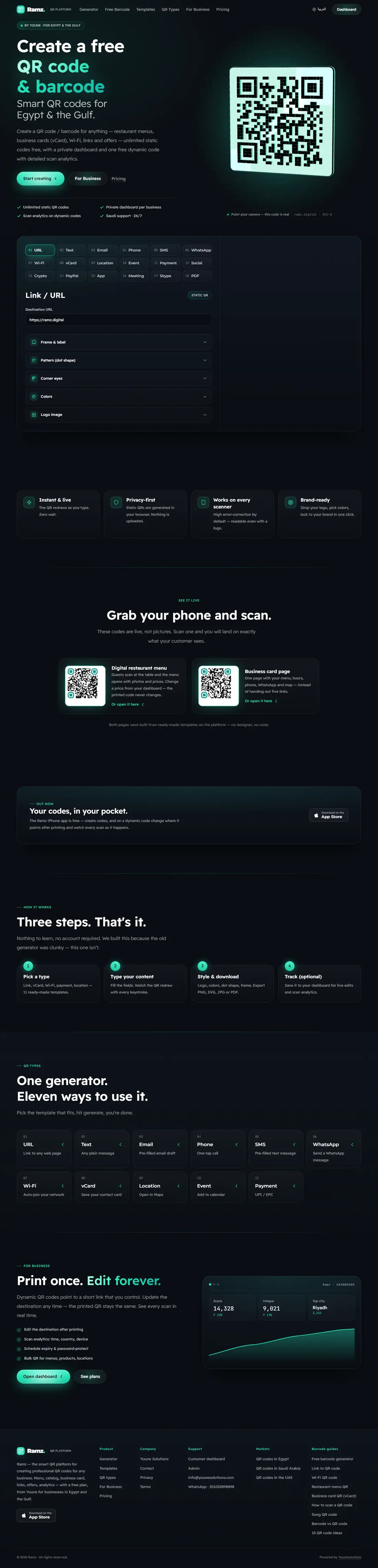
Ramz is a smart Arabic platform for creating QR codes, managing them and tracking their scans, serving businesses in Egypt and the Gulf. The Younex team handled the platform's engineering and development in full: an instant generator running inside the browser, dynamic codes whose destination can be changed after printing with detailed analytics for every scan, ready-made templates for digital menus and business cards, a dashboard for clients and another for administration, alongside an iPhone app named Ramz QR Code that puts the codes in the business owner's pocket wherever they are.
Project overview
The Ramz platform project set out from an idea simple on its surface and deep in its details: that any business owner, however limited their technical experience, should be able to create a professional QR code carrying their visual identity within a single minute, then control that code after printing it and know precisely who scans it, when and from where. A code printed on a restaurant table, a property sign or a product wrapper is not merely an image but a permanent point of contact between the business and its customers, and that point has to stay flexible and measurable.
The Younex team worked on the platform as its development and technical engineering partner, designing the back-end structure, building the interactive generator, developing the dynamic codes and analytics system, creating the dashboards, and connecting all of that to an iPhone app and a unified programming interface. The result is a complete platform bringing together the ease of free tools and the power of enterprise solutions, with an Arabic-first interface and full English support.
The platform was designed to cover two complementary tracks: an open free track allowing unlimited static codes to be created without registration, and a professional subscription-based track that unlocks dynamic codes, analytics, advanced templates and team tools. This balance made Ramz a broad draw for individual users and at the same time a genuine working platform for businesses that rely on codes in their daily contact with customers.
The client and the sector
Ramz operates in the software-as-a-service sector, specifically in the field of QR code solutions and offline marketing, an area that has seen notable growth since codes became part of daily life in restaurants, cafés, shops, clinics and events. The platform targets the Arab markets, with a clear focus on Egypt and the Gulf states, which is why the interface, the content and the user experience were designed for this audience from day one, and are not a later translation of a foreign product.
The platform addresses a broad segment of businesses: restaurants, cafés and bakeries needing an updatable digital menu; beauty salons, clinics and gyms that rely on bookings; estate agencies wanting to reuse their signage for more than one property; pharmacies, shops and fashion stores presenting their products and offers; along with event organisers, schools, photographers and personal brand owners. This variety obliged the team to build a flexible system adapting to each sector's needs without turning into a complicated product.
The challenge
Most QR code creation tools available in the market are foreign, their interfaces are not prepared for Arabic, and their prices are set in currencies that do not suit many small and medium businesses in the region. Even the free ones among them often produce static codes that cannot be changed after printing, or conceal sudden restrictions that disable the code after a while. The core challenge, then, was building a trustworthy Arabic alternative solving these problems at their root.
From this challenge branched a set of precise requirements the team had to deal with:
- Flexibility after printing: the restaurant owner who changes their prices, or the estate agency that sells a unit and lists another, does not want to reprint the codes every time.
- Real measurement of impact: the need to know the number of scans, their timing, the country and the device type, to turn a printed code into a measurable marketing channel.
- A consistent visual identity: businesses want codes carrying their colours, their logo and a distinctive frame, while preserving readability across all scanning apps.
- Ready-made destination pages: many businesses do not have a website, so they need a menu page or a business card built in minutes without a designer or a developer.
- Multiple channels: a consistent experience across the site, the dashboard and the phone app, with one account and synchronised data.
- Performance and privacy: fast generation that does not burden the servers, while respecting the privacy of the user who does not want to create an account.
The solution Younex delivered
The Younex team adopted an engineering approach that clearly separates two kinds of code. Static codes are generated entirely inside the user's browser, so their data never passes through the server, and they remain valid forever without an account or subscription. Dynamic codes, on the other hand, point to a short link the platform manages, which records the data of every scan then redirects the visitor immediately to the destination the code's owner has set, which can be changed at any time from the dashboard without touching the printed code.
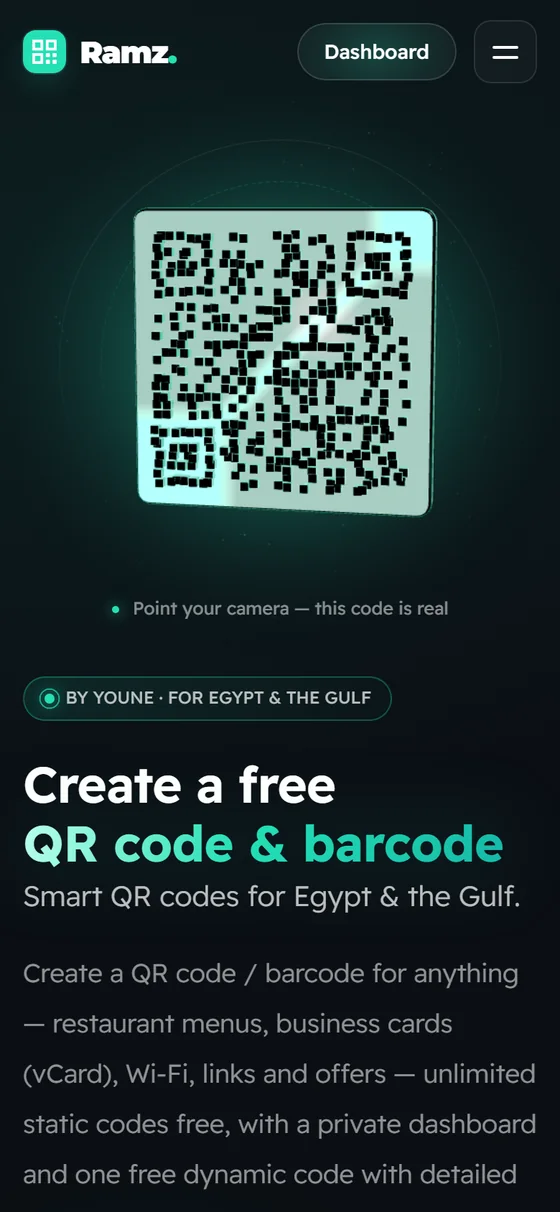
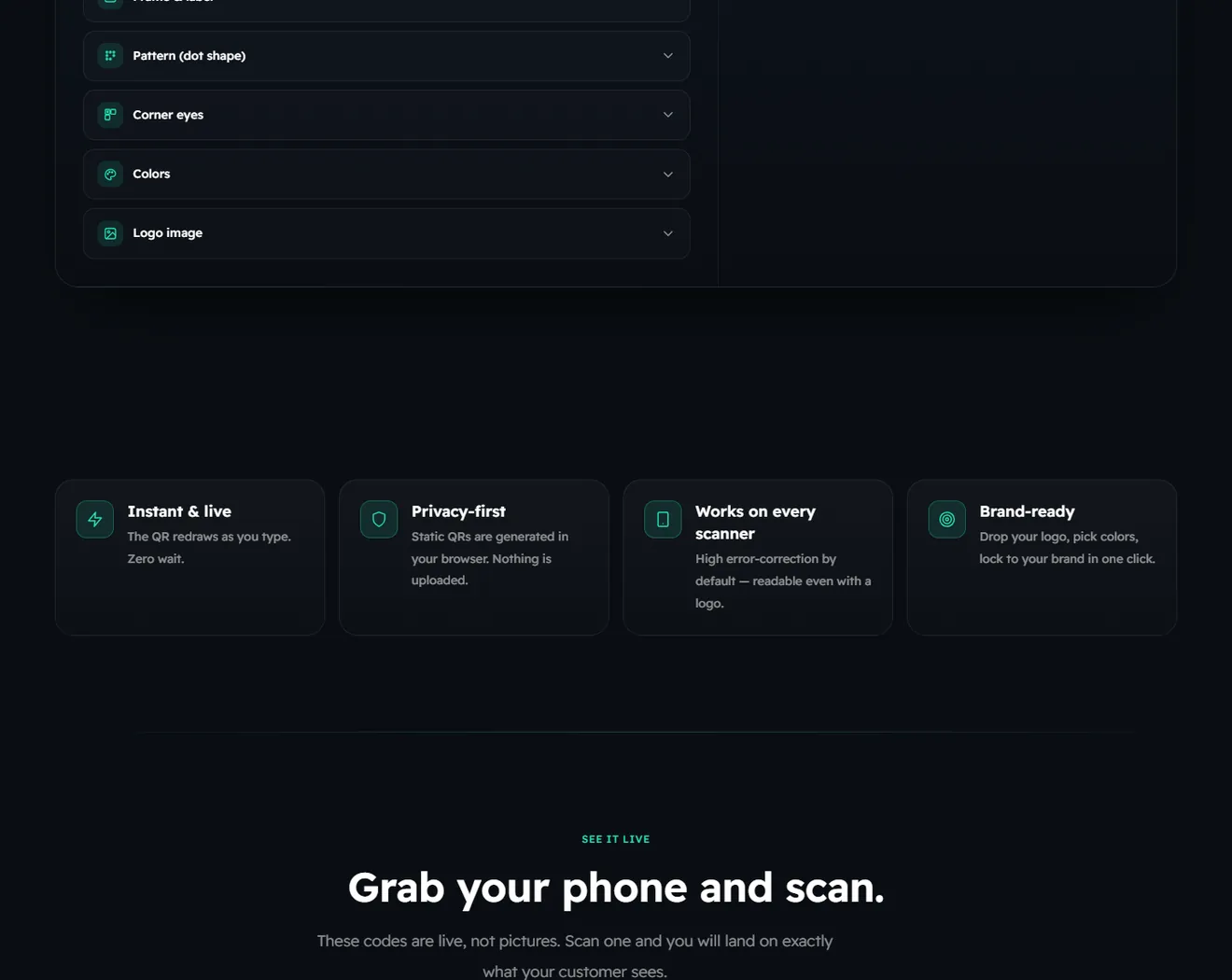
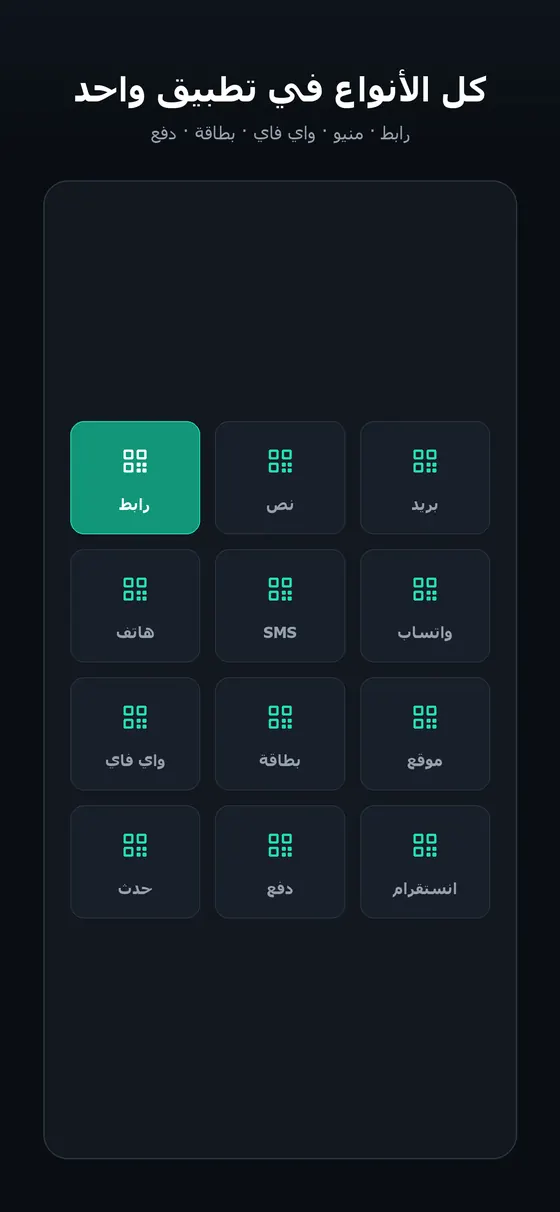
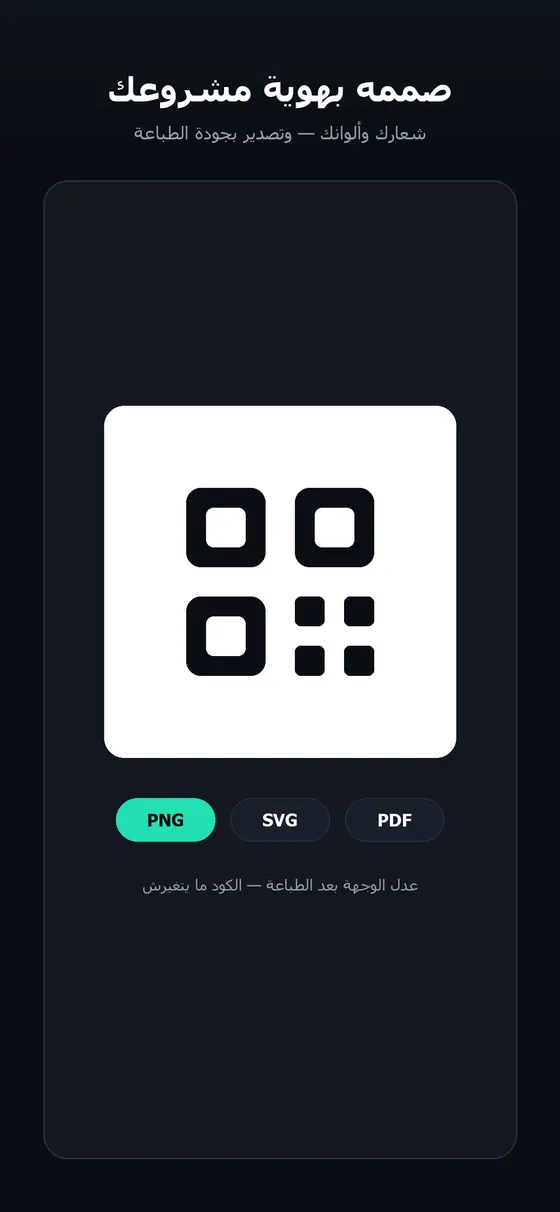
The main generator on the front page was built as a two-column interface: the user enters the content on one side, and sees the code update instantly on the other. The generator supports eleven types of data, and allows control over the shape of the dots, the eye corners, the colours and the frame, uploading the logo and adjusting its size, then downloading in multiple formats suited to printing and digital publishing.
To turn a visitor into a permanent user, the team designed the "save and track" path, which asks only for the business's basic details, creates the account automatically and converts the code into a trackable dynamic code. Then a library of sector templates and a page builder were added, allowing a digital menu, a business card or a product catalogue to be built in minutes. At the business level, bulk creation tools via CSV files, custom short domains, password protection for codes and scheduling of their expiry were delivered.
In the subscriptions layer, the team connected the packages to a local online payment gateway on the web, with an independent path for app purchases through Apple's in-app purchase system, so that the two channels coexist under one account with unified permissions. A REST interface was also created serving the iPhone app and allowing the advanced packages to integrate with external systems. This kind of platform falls under the custom software and systems development services Younex provides.
Technical specification
| Item | Detail |
|---|---|
| Project type | A SaaS platform for creating QR codes, managing them and tracking their scans |
| Back-end structure | PHP 8 with a MySQL database through PDO and tables created automatically |
| Front end | Pure HTML, CSS and JavaScript with no build step, for high loading speed |
| Code generation | In-browser generation with the qr-code-styling library and export to PNG, SVG, JPG and PDF |
| Dynamic codes | Short links recording the time, country and device then redirecting the visitor to the set destination |
| Languages | A bilingual interface: Arabic right-to-left and English left-to-right |
| Sign-in | Email with verification, in addition to signing in with a Google or Apple account |
| Payments | A local online payment gateway for the web, and Apple's in-app purchase system |
| Phone app | An iPhone app named Ramz QR Code connected to the REST interface with instant notifications |
| Dashboards | A client dashboard for managing codes and analytics, and an admin panel for clients, orders and settings |
The features delivered
- An instant generator with a live preview: the code updates with every character typed, with no waiting or reloading.
- Eleven types of code: URL, text, email, phone, SMS message, WhatsApp, Wi-Fi network, contact card, geographic location, calendar event and payment.
- Complete visual customisation: the shape of the dots, the eye corners, the foreground and background colours, the frame and the label, and uploading the logo with control over its size.
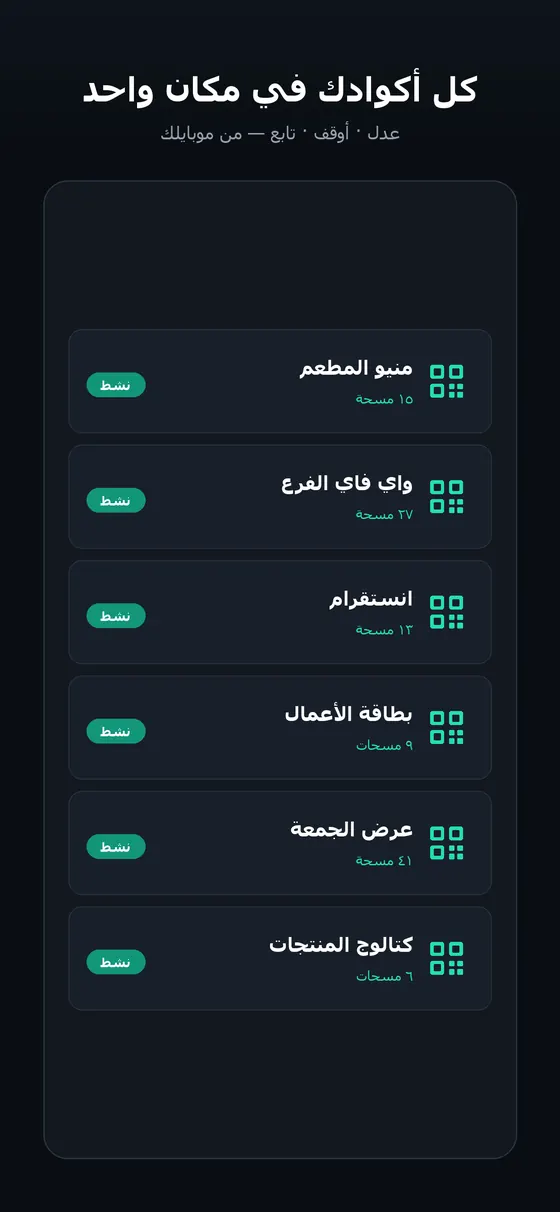
- Editable dynamic codes: changing the destination or the content after printing without needing to reprint the code.
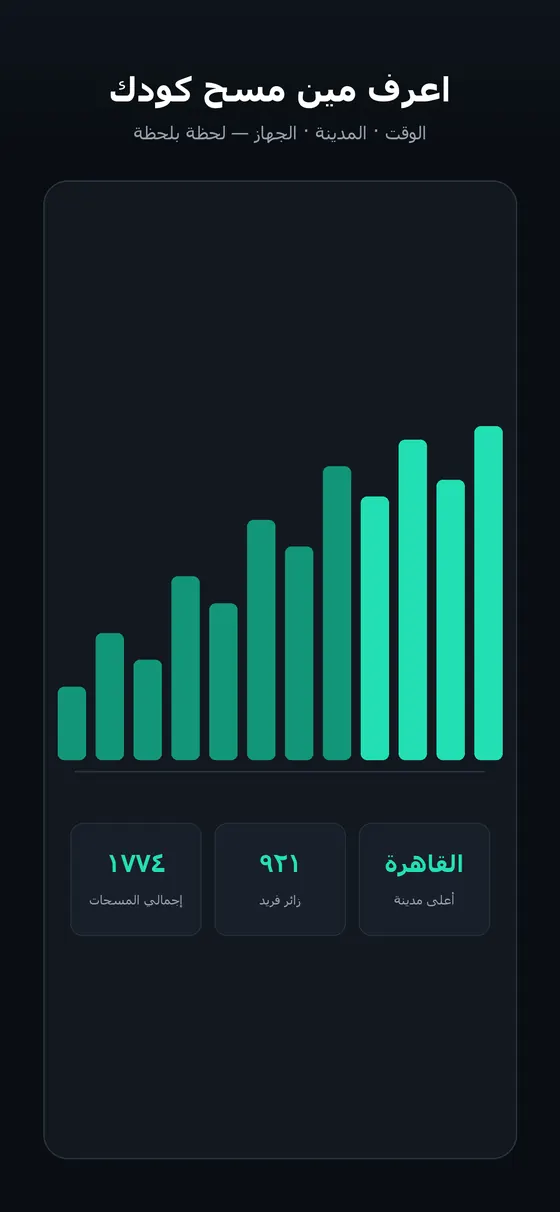
- Detailed analytics for each code: the number of scans, unique visitors, timing, country, device type and browser, with time-based performance charts.
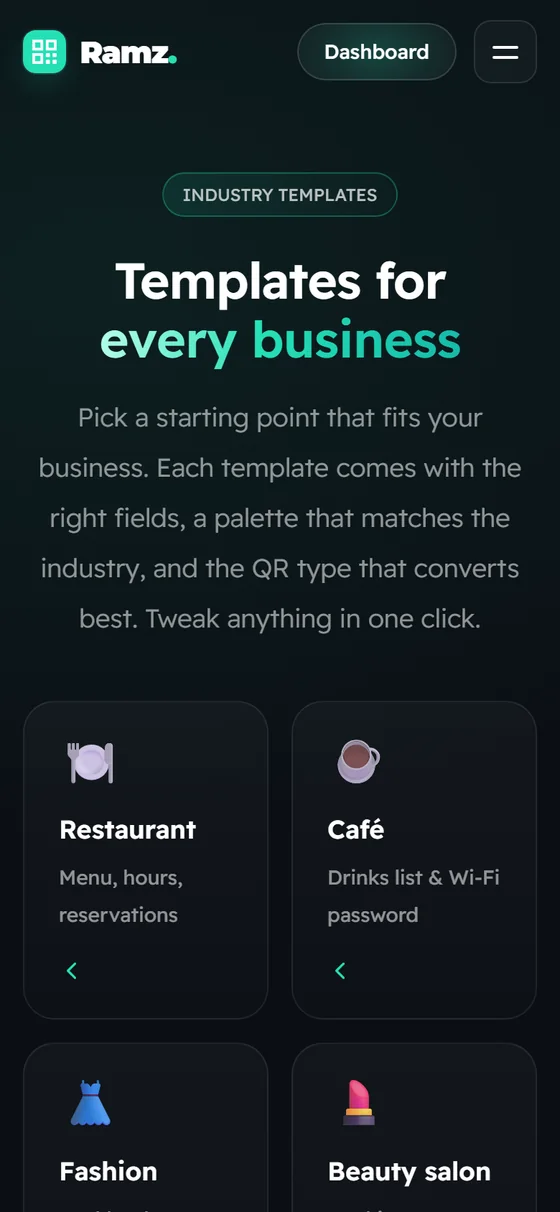
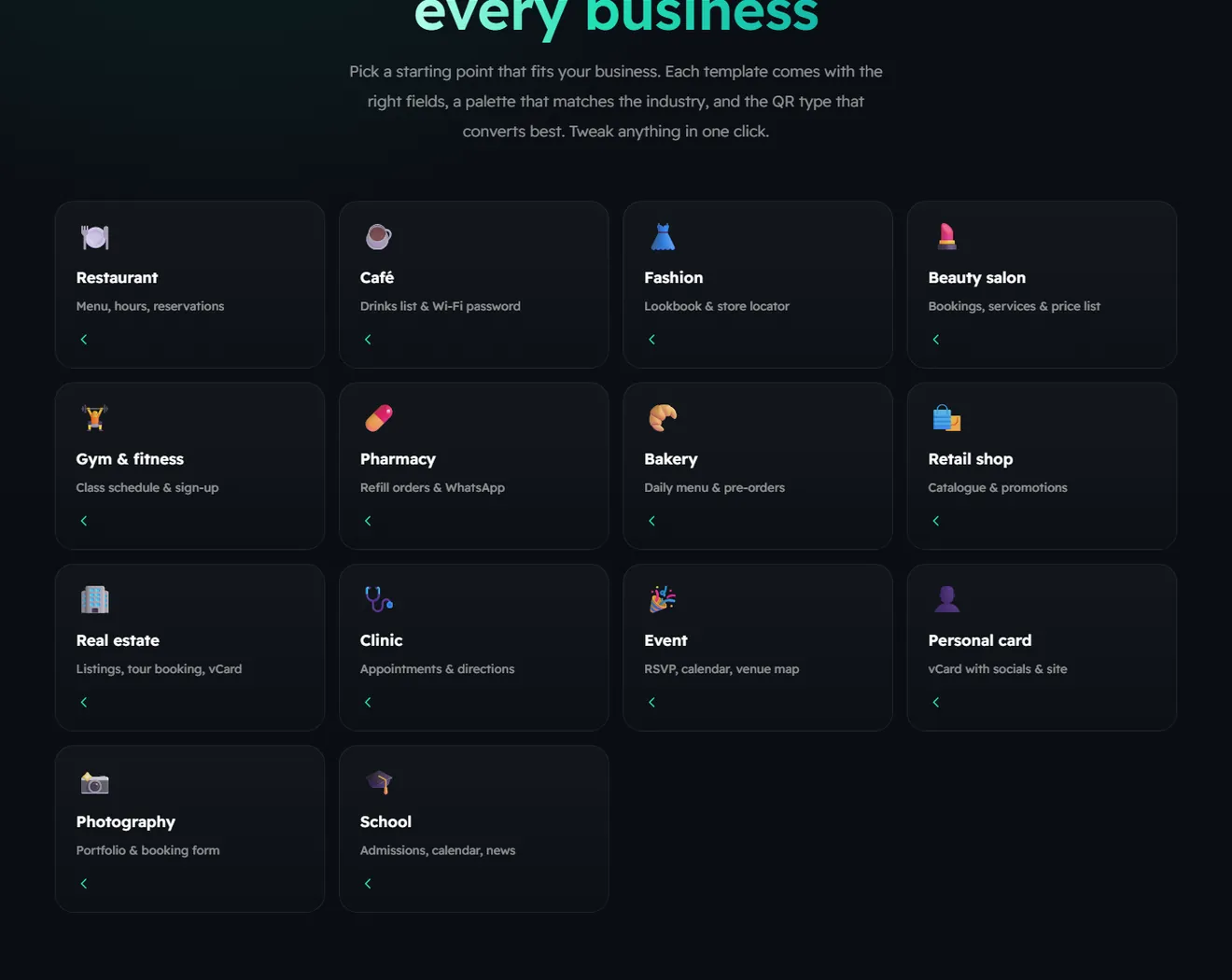
- Ready-made sector templates: fourteen templates covering restaurants, cafés, salons, clinics, property, pharmacies, events and personal business cards.
- A built-in page builder: for building a digital menu, a catalogue or an introductory page gathering opening hours, contact channels and the location in one link.
- Advanced control tools: protecting a code with a password, scheduling its expiry or temporary suspension, and following campaigns with UTM parameters.
- Bulk creation: uploading a CSV file to create a large number of codes with a unified design for branches and products.
- Custom short domains: links carrying the business's name to strengthen the customer's trust before scanning.
- A barcode generator and a built-in reader: dedicated pages for menu, Wi-Fi, business card and music link codes, with a code reader that works from the phone.
- Local market pages: content tailored to Egypt, Saudi Arabia and the UAE addressing each market in its own language and needs.
How the project ran
- Analysis and scoping: studying the competing tools globally, identifying the gaps in the Arab market, and framing the separation between the free track and the professional track.
- Structural design: planning the database for the client, code, scan and order tables, and designing the short link and fast redirect mechanism.
- Building the interactive generator: developing the in-browser generation interface with the customisation options and multi-format export, and testing readability with various scanning apps.
- Developing the dynamic codes and analytics: building the scan logging system, the time-based display panels, and the editing, protection and scheduling tools.
- Dashboards and templates: creating the client dashboard and the admin panel, and developing the sector template library and the page builder.
- Subscriptions and payments: designing the package model and connecting it to the web payment gateway, handling payment notifications and activating permissions automatically.
- The programming interface and the iPhone app: building a REST interface for authentication, codes and analytics, and connecting the app to it with social sign-in, notifications and in-app purchase.
- Search engine optimisation and launch: sitemaps, dynamic share images and market pages, then comprehensive testing, launch and ongoing follow-up.
User experience and design
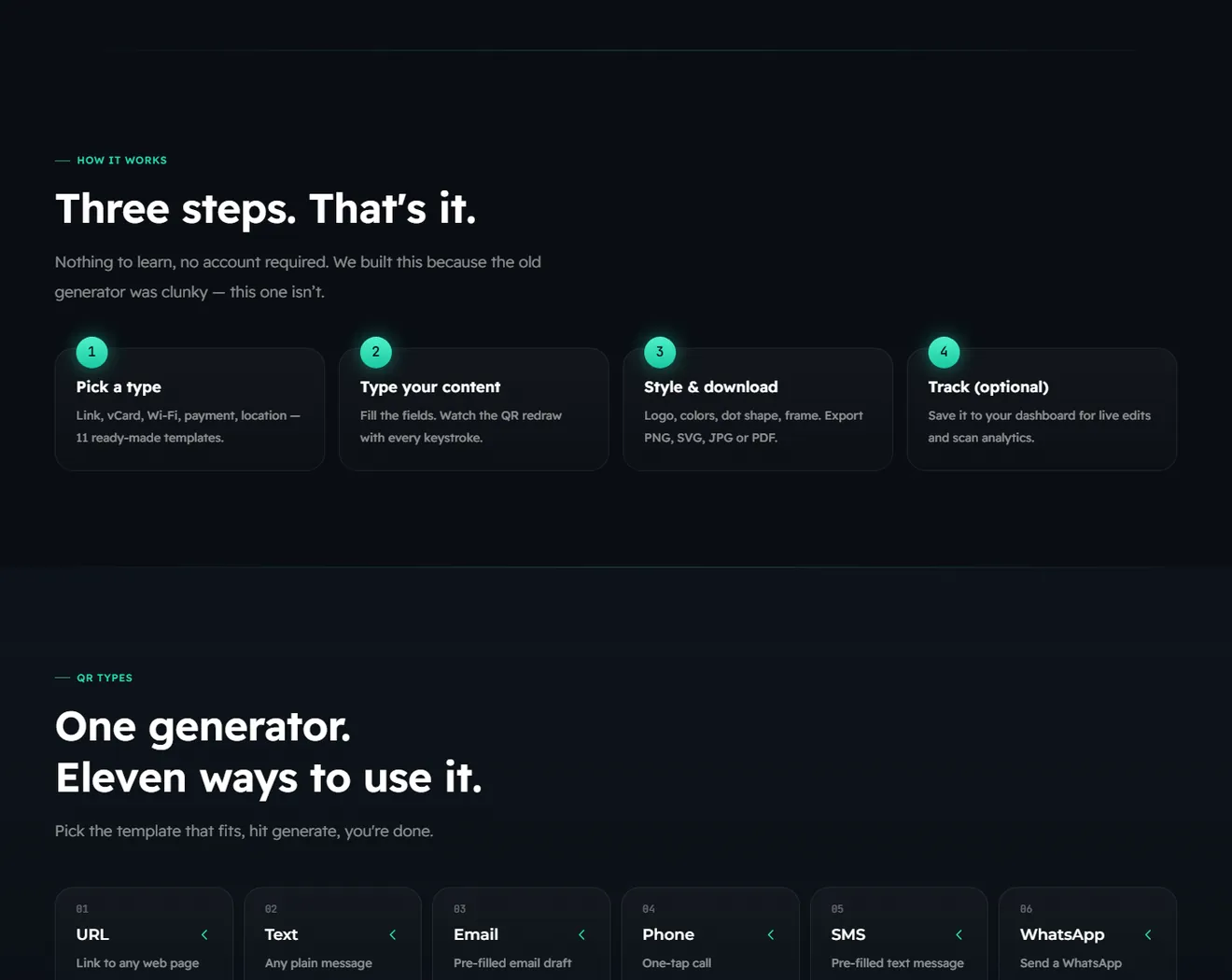
The design philosophy set out from a clear principle: that the user should reach their code before being asked for anything. So the generator appears directly on the front page, and the visitor needs no registration or payment card to begin. The journey is compressed into clear steps: choosing the type, then entering the content, then designing and downloading, with an optional route to save the code and track it later.
The visual identity relied on a bold, high-contrast colour palette bringing together deep black and a vivid yellow-green on a calm cream background, with Montserrat for headings and IBM Plex Sans Arabic for Arabic text, which gives the platform a modern technical character and guarantees clarity of reading. And the Arabic interface was designed right-to-left with genuine care, not merely a reversal of direction, with a smooth switch to English.
In the dashboard, the codes are arranged in clear lists giving quick access to editing and analytics, and the data is presented in simplified charts a business owner understands without an analytical background. The templates come with suggested colours and fields suited to each sector, and the user can change any element with a single click. This experience reflects the expertise the team brings to restaurant website and digital menu projects, where speed and clarity on the phone are an absolute priority.
The experience extends to the iPhone app, which carries the same philosophy: creating the code from the phone, changing its destination after printing, and following the scans moment by moment, with a quick sign-in using an Apple or Google account. It is a model of Younex's approach to mobile app development connected to existing web platforms, so that the site and the app work as one integrated product.
Results and impact
The platform gave businesses in Egypt and the Gulf a complete Arabic alternative to foreign code tools, bringing free creation, professional management and analytics together in one place. A business owner can now print their code once then develop its content, offers and prices with complete freedom, which saves them the costs of reprinting and gives them a marketing flexibility that was not previously available.
At the qualitative level, the project's impact can be summarised in the following points:
- Turning the printed code into a measurable channel: every code now has a clear record showing its performance, which helps in evaluating campaigns, locations and branches.
- Lowering the barrier to entry: unlimited free static codes and ready-made templates let any business start without cost or technical experience.
- A clear growth path: tiered packages moving the user from individual use to team tools, bulk creation and programmatic integration.
- A multi-channel presence: a unified experience across the site, the dashboard and the iPhone app with one account and synchronised data.
- A scalable structure: separating generation from the server, a unified programming interface, and a permissions system tied to the packages, which makes adding new features in the future straightforward.
- A strong base for search visibility: content pages dedicated to types, templates and markets, with share data and sitemaps supporting organic reach.
If you are planning to launch a SaaS platform or a digital tool serving the Arab market with a professional experience and a scalable structure, you can get in touch with the Younex team to discuss your idea and turn it into a product ready for launch.
Frequently asked questions
What is the Ramz platform and what does it offer?
Ramz is an Arabic platform for creating QR codes, managing them and tracking their scans, allowing free static codes to be created, and dynamic codes editable after printing with detailed analytics, alongside ready-made templates for digital menus and business cards and an iPhone app for managing the codes from the phone.
What was Younex's role in the Ramz project?
The Younex team handled the platform's engineering and development side, covering the back-end structure and the database, the interactive generator, the dynamic codes and analytics system, the dashboards, the subscriptions and payments, and the programming interface the iPhone app depends on.
What is the difference between a static code and a dynamic code?
A static code carries the data inside itself directly and works forever without an account, but it cannot be edited once created. A dynamic code, on the other hand, points to a short link the platform manages, so its destination can be changed at any time and the number of scans, their timing, the country and the device type can be followed.
What technologies were used in building the platform?
The platform was built using PHP 8 and a MySQL database in the back end, a front end of pure HTML, CSS and JavaScript, with code generation inside the browser using the qr-code-styling library and PDF export via jsPDF, and a REST interface serving the iPhone app.
Does the platform fully support Arabic?
Yes. The platform was designed Arabic-first with a considered right-to-left interface across all its pages and panels, with the ability to switch to English, and content tailored to the Egyptian, Saudi and UAE markets.
How do the ready-made templates help businesses?
The platform provides sector templates for restaurants, cafés, salons, clinics, property, pharmacies, events and others, coming with suggested fields and colours, so a business owner can build a digital menu, a business card or a catalogue in minutes without a designer or a developer.
How does the iPhone app integrate with the website?
The app connects to the same programming interface that serves the platform, so the user has one account across the site and the app, and can create codes, change their destinations and follow the analytics from their phone, with sign-in using an Apple or Google account and notifications.
Can Younex build a similar platform for my business?
Yes. The Younex team builds SaaS platforms and custom systems with Arabic interfaces, dashboards, subscriptions and connected mobile apps, from analysing the idea and designing the structure through to launch and ongoing development after going live.